
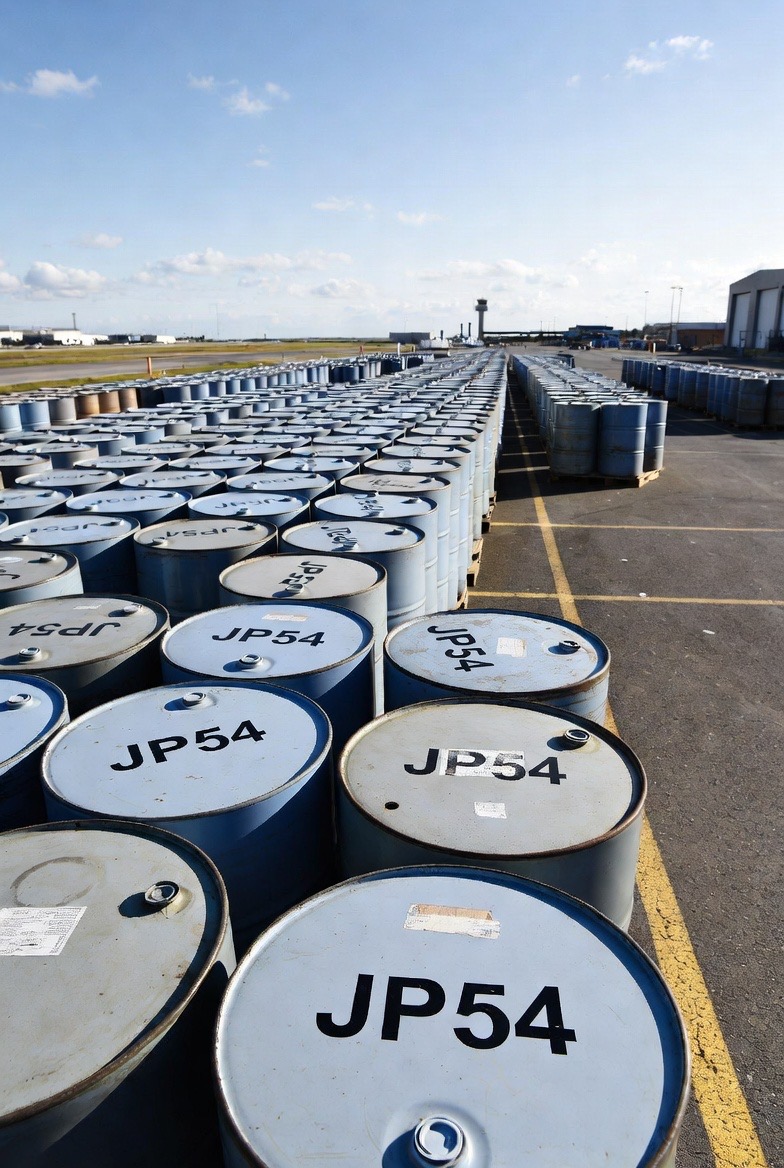
JP54 (often referred to as Aviation Kerosene Colonial Grade 54) is a term frequently used in the fuel industry, particularly in Russian and Eastern European markets, to describe a specific grade of jet fuel.1
While the name is widely used in trade documents, there is some nuance regarding its “official” status compared to standard fuels like Jet A-1.2
1. What does the name mean?
The name is an abbreviation for Jet Propulsion, Colonial Grade 54.3
- Colonial Grade: Refers to the Colonial Pipeline system in the United States, which uses “Grade 54” as a specific designation for kerosene/jet fuel moving through its network.
- JP: Standing for “Jet Propulsion,” it follows the naming convention of military fuels (like JP-8), though JP54 is primarily a commercial/industrial designation.
2. Key Characteristics
JP54 is very similar to the global standard Jet A-1 but often has slight differences in its additive package and energy density.4
- Flash Point: Typically above 38°C (100°F).5
- Freezing Point: Generally around -40°C (similar to Jet A) or -47°C (similar to Jet A-1).
- Appearance: Clear to straw-colored.6
- Usage: It is designed for gas turbine engines.7
3. The “Gray Market” & Scams
It is important to note that “JP54” is one of the most common terms used in fraudulent fuel trade offers.
- The Discrepancy: Major airlines and Western trading desks almost never trade under the name “JP54”; they trade Jet A or Jet A-1.
- Russian Export: Historically, “JP54” became the shorthand name for Russian-spec jet fuel (specifically TS-1 or T-1) when offered for export to international buyers.
- Red Flags: If you see offers for “JP54” with incredibly low prices or unusual procedures, it is often a sign of a “mandate scam” or “ghost cargo” in the oil and gas industry.
Comparison Table
| Feature | Jet A-1 (Global Standard) | JP54 (Colonial Grade) |
| Primary Region | Worldwide | Russia / Eastern Europe / CIS |
| Freezing Point | $-47^\circ\text{C}$ | Typically $-40^\circ\text{C}$ to $-47^\circ\text{C}$ |
| Trading Status | Highly Standardized | Often non-standard / Private contracts |
| Common Use | Commercial Airlines | Industrial / Export / Older Military Specs |