
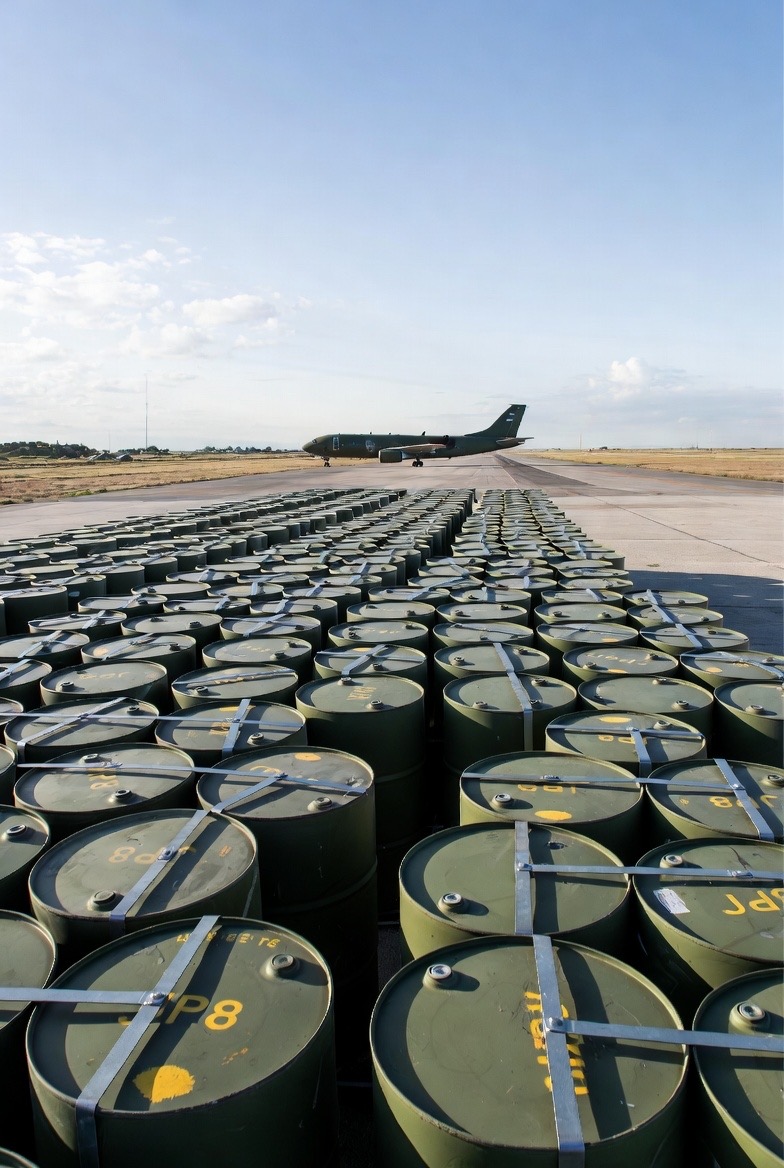
JP-8 (Jet Propulsion 8) is a kerosene-based jet fuel used by the United States military and NATO. Introduced in the late 1970s, it was designed as a safer, more stable alternative to the highly volatile JP-4.
While it is chemically very similar to commercial Jet A-1, JP-8 contains a specific “military-only” additive package to survive combat conditions and fulfill the military’s “Single Fuel Policy.”
## Technical Specifications
JP-8 must adhere to the strict MIL-DTL-83133 specification.
## The “Military” Additive Package
What truly defines JP-8 compared to civilian fuel are three mandatory additives:
- FSII (Fuel System Icing Inhibitor): Prevents ice crystals from forming at high altitudes, which could block fuel lines. It also acts as a biocide to prevent microbial growth in tanks.
- CI/LI (Corrosion Inhibitor & Lubricity Improver): Protects metal components and provides the lubrication necessary for high-pressure fuel pumps.
- SDA (Static Dissipator Additive): Reduces the buildup of static electricity during high-speed refueling to prevent accidental sparks and explosions.
Note: JP-8+100 is a common variant containing a thermal stability additive. This allows the fuel to withstand an additional 100°F (about 56°C) of heat without breaking down, preventing “coking” (carbon deposits) in advanced engine nozzles.
## The “Single Fuel Concept”
One of the most unique aspects of JP-8 is its versatility. Under the U.S. Army’s Single Fuel Policy, JP-8 is used to power almost everything in a combat theater, including:
- Aircraft: Jet engines and turboprops.
- Ground Vehicles: M1 Abrams tanks, Humvees, and Bradley Fighting Vehicles (acting as a replacement for diesel).
- Support Equipment: Portable generators, heaters, and even field stoves.
## Comparison with Other Fuels
- vs. Diesel: JP-8 is less viscous and has a lower cetane rating than standard diesel. While most military diesel engines can run on it, long-term use can sometimes cause wear on fuel injectors due to the lower lubricity.
- vs. JP-5: JP-5 is the Navy’s carrier-based fuel. It has a much higher flash point to reduce the risk of catastrophic fires in the tight confines of a ship.
- vs. Jet A: Jet A is the US commercial standard. It has a higher freezing point and lacks the mandatory military additives.
Fuel TypeComparison to JP-8 Jet A / A-1Commercial fuel. JP-8 is Jet A-1 + additives. JP-5 Used by the Navy on aircraft carriers. It has a much higher flash point to prevent catastrophic fires in the tight confines of a ship. F-24 A newer “budget” version of JP-8 used in the continental U.S. that uses Jet A as a base but has the same additive package.


